
Pregnancy Skin Care: What Changes, What Helps and What to Avoid
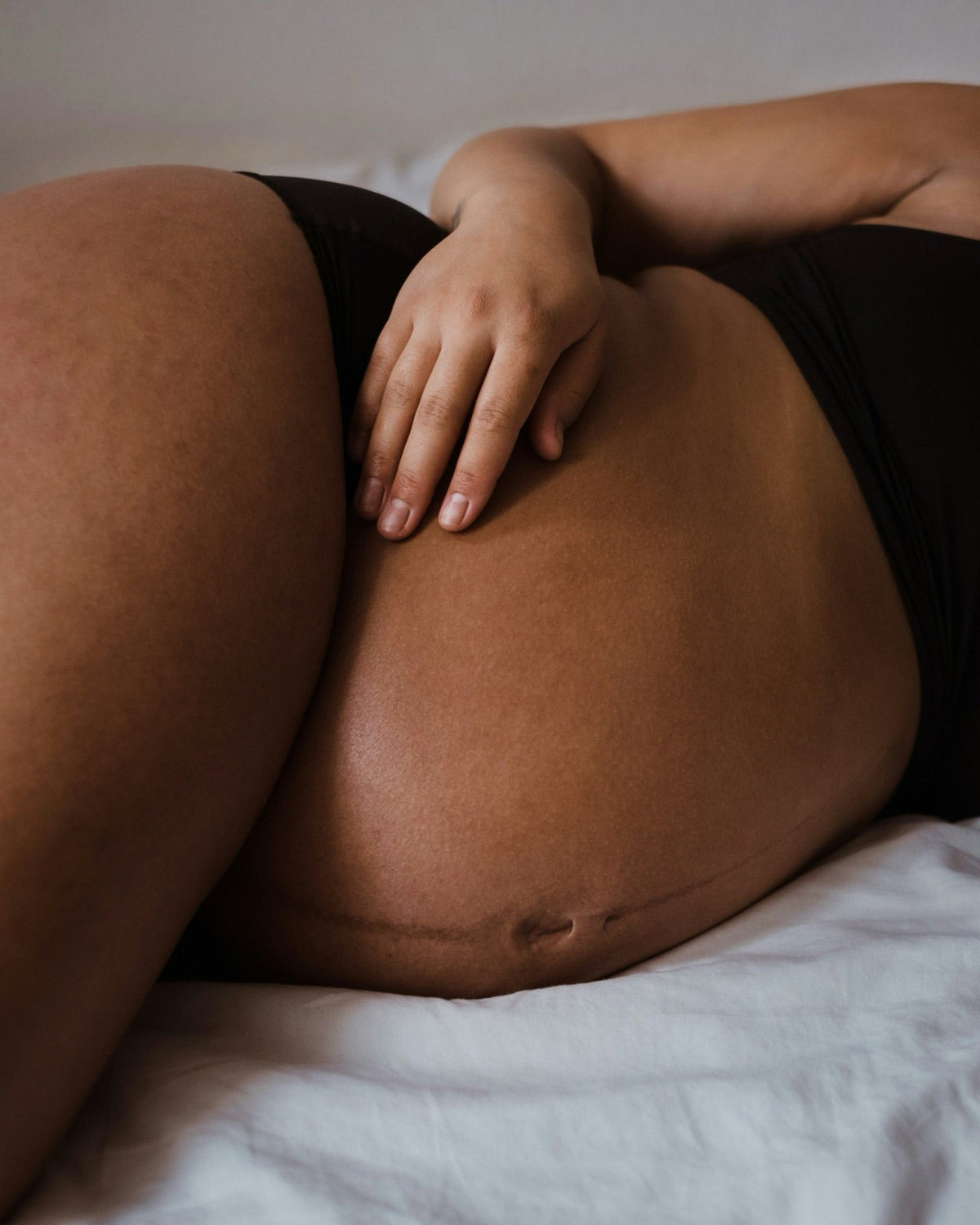
Hormones, a growing bump and extra blood flow all change your skin during pregnancy. Most changes are harmless and fade after birth, but a few are worth knowing about. Here's an honest guide to what happens, what actually helps and which ingredients to skip.
A quick note: check every skin care product, including over-the-counter acne treatments, with your doctor or midwife during pregnancy.
Common pregnancy skin changes
- Stretch marks: very common, especially on the belly, breasts, hips and thighs. They often appear in the second half of pregnancy and start pink, red or purple before slowly fading to silvery lines.
- Melasma ("the mask of pregnancy"): darker patches on the cheeks, forehead and upper lip, triggered by hormones and made worse by sun.
- Linea nigra: a dark line from the belly button down, which fades after birth.
- Breakouts, especially in the first trimester.
- Dry, tight, itchy skin as your belly stretches.
- Spider veins, skin tags and darker nipples, which usually improve after birth.
The honest truth about stretch marks
Stretch marks happen when skin stretches faster than it can adapt. Genetics play a big role, along with how quickly you gain weight and your skin type. Research reviews have not found any cream that can guarantee prevention, and anyone promising that is overselling.
What a consistent routine can do is keep stretching skin hydrated, supple and less itchy. Some small studies have looked at ingredients like centella asiatica and hyaluronic acid for skin elasticity, and many people find a daily routine makes their skin feel much more comfortable. It's also a nice daily moment to check in with your changing body.
- Start early, ideally in the first or second trimester, before most stretching happens.
- Apply a rich, fragrance-free cream twice daily to your belly, hips, thighs and breasts.
- Apply right after showering while your skin is still slightly damp, to lock in moisture.
- Massage gently in circles, which also helps with itch.
- Keep going after birth while your skin recovers.
A simple pregnancy skin routine
- Cleanse with a gentle, fragrance-free cleanser. Warm, not hot, showers are kinder to dry skin.
- Moisturize your face and body every day, with extra attention on the belly.
- Protect with daily sunscreen, SPF 30 or higher. Mineral sunscreens (zinc oxide or titanium dioxide) are a gentle choice and help keep melasma from darkening. A hat helps too.
- Keep it simple. Pregnancy skin is often more sensitive, so fewer products and no added fragrance are often better.
Ingredients to avoid or check with your doctor
| Ingredient | Guidance |
|---|---|
| Retinoids: retinol, retinyl palmitate, tretinoin, adapalene, tazarotene | Avoid during pregnancy |
| Oral isotretinoin | Never use in pregnancy; it causes serious birth defects |
| Hydroquinone (skin lightening) | Usually avoided; ask your doctor |
| High-strength chemical peels and oral salicylic acid | Avoid |
| Tetracycline antibiotics (doxycycline, minocycline) | Avoid |
Often considered acceptable, but check with your provider: azelaic acid, glycolic acid, topical benzoyl peroxide in limited amounts, and low-strength salicylic acid face washes.
When a skin change needs a doctor
- Intense itching, especially on the palms of your hands and soles of your feet, often worse at night, with or without a rash. This can be a sign of intrahepatic cholestasis of pregnancy, a liver condition that needs testing and care. Call your provider promptly.
- An itchy rash of raised bumps that starts in stretch marks in the third trimester (often called PUPPP). It's harmless for your baby but very uncomfortable, and your provider can help.
- Blisters, a rash with fever, or any mole that changes shape, size or color.
How we approached our own cream
When we made Stretch Mark Defense Cream, we left out added fragrance, retinoids, parabens and mineral oil, and built it around centella, hyaluronic acid and peptides to keep stretching skin hydrated and comfortable. Whatever you choose, look for those same basics: rich, fragrance-free and pregnancy-appropriate.
More in our pregnancy guide
- Healthy pregnancy meals and fruits
- Prenatal vitamins: what you need and why
- First, second and third trimester essentials
- Hospital bag checklist · Postpartum essentials
This article is for general information only and is not medical advice. Always talk to your doctor or midwife about your own skin and pregnancy.